

Nothing drives innovation and automation as limitlessly as AI — the first technology without limits. But as machines take on more and more tasks, the role of humans is increasingly shifting into the creative realm.
This presents immense opportunities — but also major challenges. Because one thing becomes clear: The fewest deliver the most, while most perform below average.
This reality is based on two principles that shape the modern working world.
How automation is changing relevance in the world of work
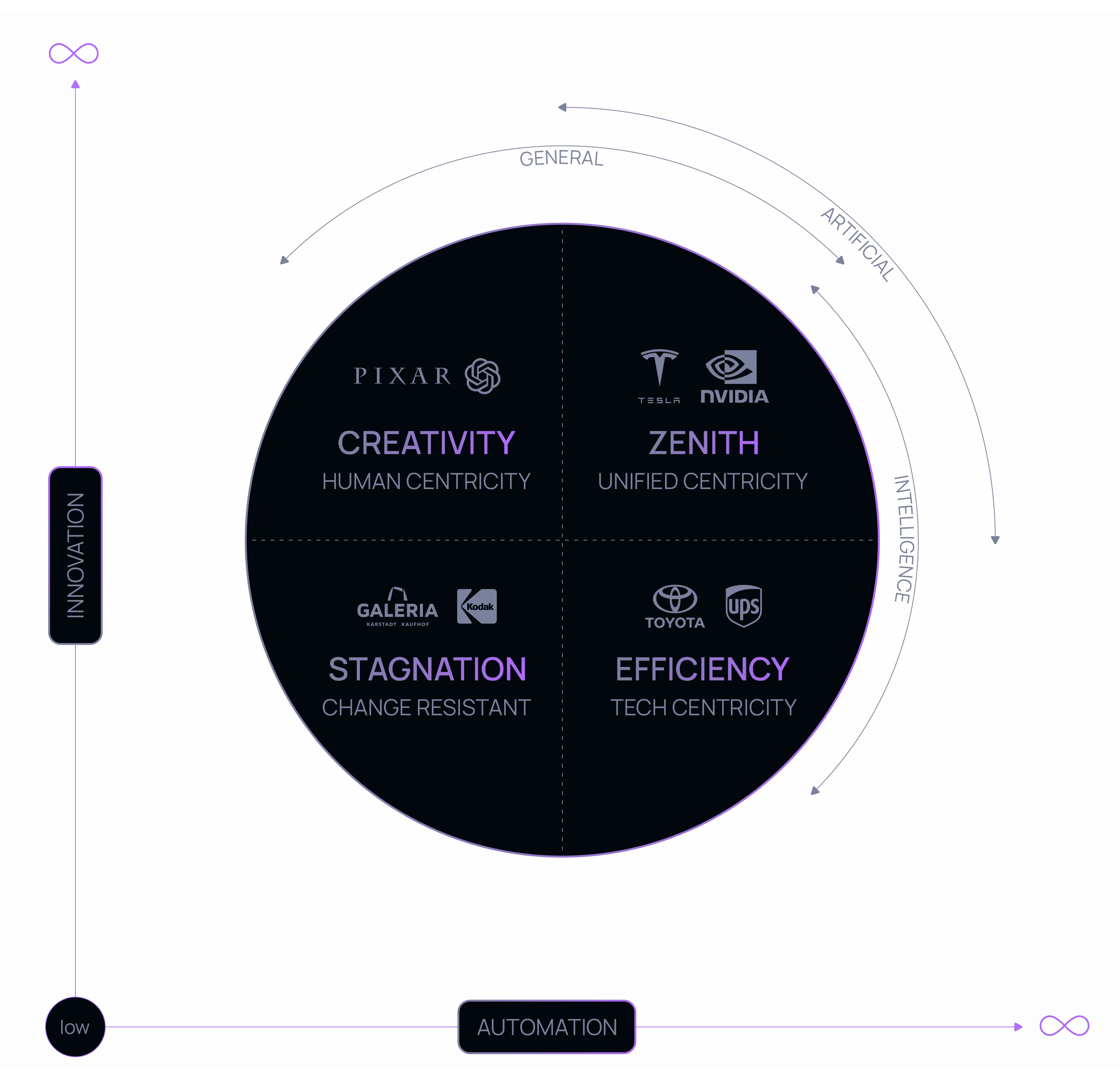
1. Automation and robotization
Increasing automation and robotization in various industries frees people from repetitive and routine tasks. But instead of making it obsolete, this development pushes people into areas that machines do not (yet) master: creativity, problem solving and emotional intelligence.
This is exactly where the Pareto Principle and the Price Law meet reality:
2. The laws of creative work
Pareto principle: 80% of the results come from 20% of the causes or effort.
Example: In a marketing team, a small proportion of employees develop the most successful campaigns. Out of ten campaign ideas, the two ideas that generate 80% of reach and revenue come from just one or two people on the team. The rest of the ideas have relatively little impact.
Price law: The square root of the total number of participants provides 50% of the total output.
Example: In a software development project with 25 developers, a core team of five people contributes half of the code that is truly innovative and critical to success. The remaining 20 developers provide support work, but their contributions are less critical to overall success.
3. What does relevance in the working world through AI mean for companies?
This dynamic results in an unequal distribution of output and productivity — with far-reaching consequences:
- Top talent becomes decisive: A small group of high-performing people accounts for the majority of the success, while the rest fall short of expectations.
- Shortage of skilled workers worsens: The demand for experts is already outstripping supply.
- Workforce transformation is becoming inevitable: Organizations must restructure their teams and quickly develop the skills of their workforce in a targeted manner.
- Inefficient transformation: Parallel initiatives compete for resources and lead to uncoordinated action — a waste of energy and focus.
The challenge: How can companies maximize the potential of the few without losing the majority? How can you increase the productivity of the entire organization and at the same time ensure a clear focus on goals?
Relevance in the world of work through AI is not just a buzzword in this context — it is the key to long-term competitiveness. The systemic CLARISCOPE diagnostics and the AI-Joint Business Plan helps you do that.
Ensuring relevance through the purpose of learning
Automation and AI not only pose major challenges for companies — they challenge everyone, regardless of whether you are an executive, manager, skilled worker or unskilled employee.
The key questions are: How do I stay relevant? How can I my Scale capabilities faster?
This question is not only decisive professionally, but also affects personal purpose in life. It's about being clear about what you're studying and working for—not just what you're learning.
- Don't follow the hype: Dealing exclusively with the latest technologies or trends (“the last sow driven through the village”) leads to a dead end. What is a “tech hit” today is already a commodity tomorrow.
- The purpose of learning: The more important question is Why do you learn and how what you learn remains relevant in the long term. Learning should always aim to develop skills that are important not only in the short term but also in an uncertain future.
The answer lies in sustainability: It is not about mastering the next tool or the latest method, but about how to evolve in such a way that you can make an indispensable contribution in a world of constant change.
The Clariscope solution
CLARISCOPE develops and implements AI strategies end-to-end — effectively, efficiently and with existing resources. Our mission:
- Maximize ROAI (Return on AI): With our systemic CLARISCOPE framework We create clear structures to use AI specifically for innovation and automation.
- Anti-fragile organizations: We help companies not only to be resilient, but also to grow through disruption.
Conclusion: AI is changing the world of work — and only companies and people who understand and shape this dynamic will be successful in the long term.